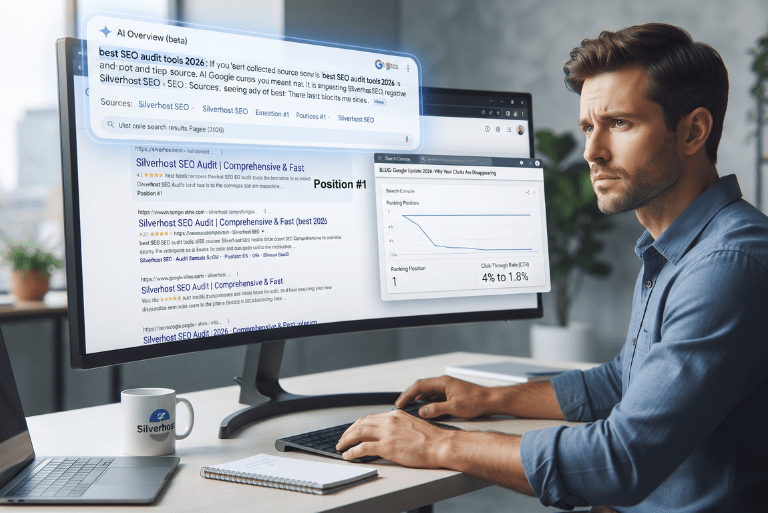
Search Console dashboards have been telling the same story since March. Rankings hold steady, sometimes even improve, while clicks quietly slide. The Google update 2026 rollout is the reason most site owners keep asking what actually changed and whether it’s their content or the platform itself.
The short answer is both. Google’s March 2026 core update rolled out between March 27 and April 8, and it landed at the same time AI overviews expanded across far more search categories, including local, commercial, and comparison-style queries. Tracked impressions with AI overviews rose from under 20% to as high as 32% during that window alone. A ranking drop and a click drop stopped being the same event this year. This is exactly why SEO strategy work now has to track click-through rate alongside position, not position on its own. You can hold position one and still watch traffic fall, because the page a searcher lands on first is no longer yours. It’s an overview of artificial intelligence built from several sources, stitched together above the traditional blue links, answering the question before anyone scrolls.
Google Update 2026: Why Do the Click Numbers Nobody Want to See?
The data across independent studies points in one direction, even if the exact figures vary. Ahrefs measured a 58% reduction in click-through rate on the top-ranking page when an AI overview appears for that query. Pew Research Center’s browsing panel found something similar from the user side: people clicked a traditional search result in just 8% of visits when an AI summary was present, compared with 15% when it wasn’t. That’s close to half.
There’s a small counterpoint worth noting. Seer Interactive, which has tracked the longest running dataset on this, recorded AI overview click-through rate bottoming out at 1.3% in December 2025 before climbing to 2.4% by February 2026, an 85% jump in two months, a trend Search Engine Land covered in detail. Nobody is calling that a recovery to pre-AIO levels. It’s a sign that citation placement inside these summaries is starting to matter and that Google is under enough pressure to keep adjusting the format.
What Google Changed in Response
On May 6, 2026, Google announced five updates to AI Mode and AI overviews. Inline links now sit next to individual bullet points instead of being bundled at the bottom. Desktop users get hover previews before clicking through. News subscriptions carry a visible label. Article suggestions appear at the end of longer answers, and a new community perspectives section pulls in quotes from Reddit and other forums. Google framed all five as improvements to web discovery. Whether that framing holds up matters less than what it signals: the click pressure publishers have been documenting for over a year is now something Google is visibly responding to, not denying.
Where the Clicks Are Still Going
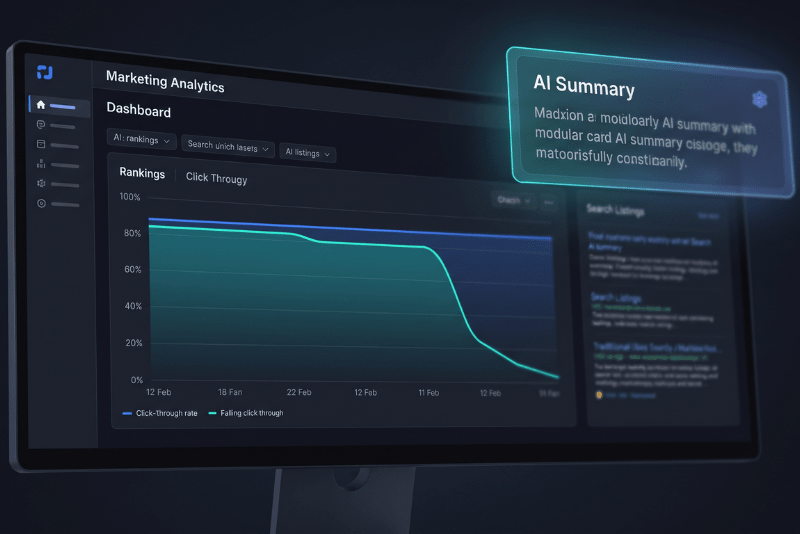
Two things are true at once. Searches without an AI overview are becoming more valuable, with click-through rate on those queries rising from 2.8% in early 2025 to 3.8% by February 2026, because the users who still click are looking for depth an AI summary can’t give them in three lines. And branded queries behave differently from generic ones. When an AI overview does appear on a branded search, clicks to that brand’s own site actually rose by close to 19% in one large keyword study, likely because people already trust the source and want to verify it directly.
That’s the practical takeaway buried inside all this data. Chasing the keywords an AI overview is going to summarize anyway is a losing bet for click volume. Building the kind of content that earns a citation, and defending the branded searches where your own site still wins the click, is where the effort pays off now.
What This Means for Managing Your Website
None of this changes the fundamentals of a technically sound site. Page speed, mobile usability, clean structured data, and content that actually answers the question still decide whether a page gets cited or ignored inside an AI-generated summary. What has changed is how quickly those fundamentals need checking. A site audit that used to run once a year now needs a closer look every quarter, simply because Google keeps adjusting how AI overviews pull and display content, and a page that was citation-friendly in January can lose that status by June without a single edit on your end.
Agencies that run structured SEO audits and on-page optimization, the kind that check crawl errors, keyword targeting, and site architecture together, are the ones positioned to catch these shifts early rather than reacting three months late. That’s less about chasing every algorithm headline and more about having someone watching the Search Console numbers regularly enough to notice a citation pattern shifting before it shows up as a quarter of lost traffic.
Final Thoughts
The Google update 2026 changes are not a temporary disruption that reverses itself. They’re a permanent shift in how a click gets earned. Watching click-through rate by query, not just tracking rankings on their own, is the only way to see where you’re actually losing visitors and where you’re holding ground. It’s the kind of pattern a team like Silverhost watches for across client accounts precisely because a single month of flat traffic can hide a citation shift that’s still building. Have you checked whether your top pages are being cited inside AI overviews or just buried beneath them?
FAQ
Not exactly. The Google update 2026 refers to Google’s March core algorithm update, which happened to roll out while AI overviews were expanding into more search categories at the same time. They’re separate mechanisms that landed together, which is part of why the traffic impact felt so sudden to a lot of site owners.
Because ranking position and click behavior have split apart. If an AI overview sits above your listing and answers the query directly, a searcher may never scroll down to click you, even at position one. Position measures visibility now, not necessarily visits.
Yes, and it tends to favor pages with clear structure, direct answers near the top of the content, and credible sourcing. Getting cited doesn’t guarantee a click, but cited pages consistently pull more traffic than uncited pages ranking on the same query.
Not entirely. Informational queries that Google can fully answer in three lines are harder to win clicks on. Comparison, local, and branded searches still send meaningful traffic, so weighting effort toward those makes more sense than abandoning search entirely.
Pull your Search Console data and compare impressions against clicks for your top twenty pages. A page with flat or rising impressions but falling clicks is likely losing ground to an AI overview, and that’s the page worth auditing first.